
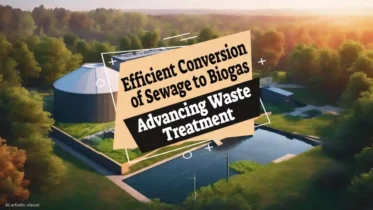
Efficient Conversion of Sewage to Biogas: Advancing Waste Treatment for Sustainable Energy Generation
Read on to learn about advancing foul waste treatment, for sustainable energy generation through the efficient conversion of sewage solids to biogas. When we talk about waste, it can seem like a dirty subject. But what if we could turn that waste into something useful? Imagine the mucky water and sludge from our toilets and […]
The Importance of Carbon Removals in Achieving Net Zero
Carbon removals being the opposite of carbon emissions will be a significant contributor to the effort to reduce the worst effects of climate change and global warming. While reducing emissions is crucial, it is not enough to achieve the goal of net zero by 2050. Active removal of carbon from the atmosphere is necessary. Of […]

US Falling Short on Methane Emissions Reduction Commitments from Landfills: Report
The United States is failing to uphold its commitment to reducing methane emissions from landfills, a promise it made at the Glasgow 2022 Climate Change Conference, according to a new study. The United Nations Framework Convention on Climate Change (UNFCCC) has identified this issue as an easily achievable solution for mitigating climate change within the […]
EC Support for Biomethane Fuel Grows – Doubling Production by 2030 Considered for France
The news is that EC support for biomethane fuel is continuing apace. So much so that a doubling of biomethane production by 2030 is being considered by the authorities in France. To us this makes sense. It is a sustainable and environmentally friendly option for energy production and is considered a key component in the […]

UK Begins Fightback Against Plastic Pollution: Dramatic 2040 Deadline Set for a Cleaner Future
The UK government has signed a Ministerial Statement calling for an ambitious global plastic pollution treaty to tackle plastic pollution and protect the marine environment. A plastic pollution treaty is sought for: including a reduction in single-use plastics, the improvement of waste management and recycling systems, and the promotion of sustainable and circular economy models. […]

Cutting Methane Emissions: Key to Avoiding Climate Tipping Points
Recent studies have shown that cutting methane emissions is crucial in limiting global warming to the internationally agreed goal of 1.5-2 degrees Celsius. This is because methane is a potent greenhouse gas that is estimated to be 28 to 85 times more powerful than carbon dioxide in terms of trapping heat in the Earth’s atmosphere. […]